Meeting the Moment: Bioethics in a Revolution
DOI:
https://doi.org/10.7202/1122843arKeywords:
revolution, partisanship, absolutism, honourLanguage(s):
EnglishAbstract
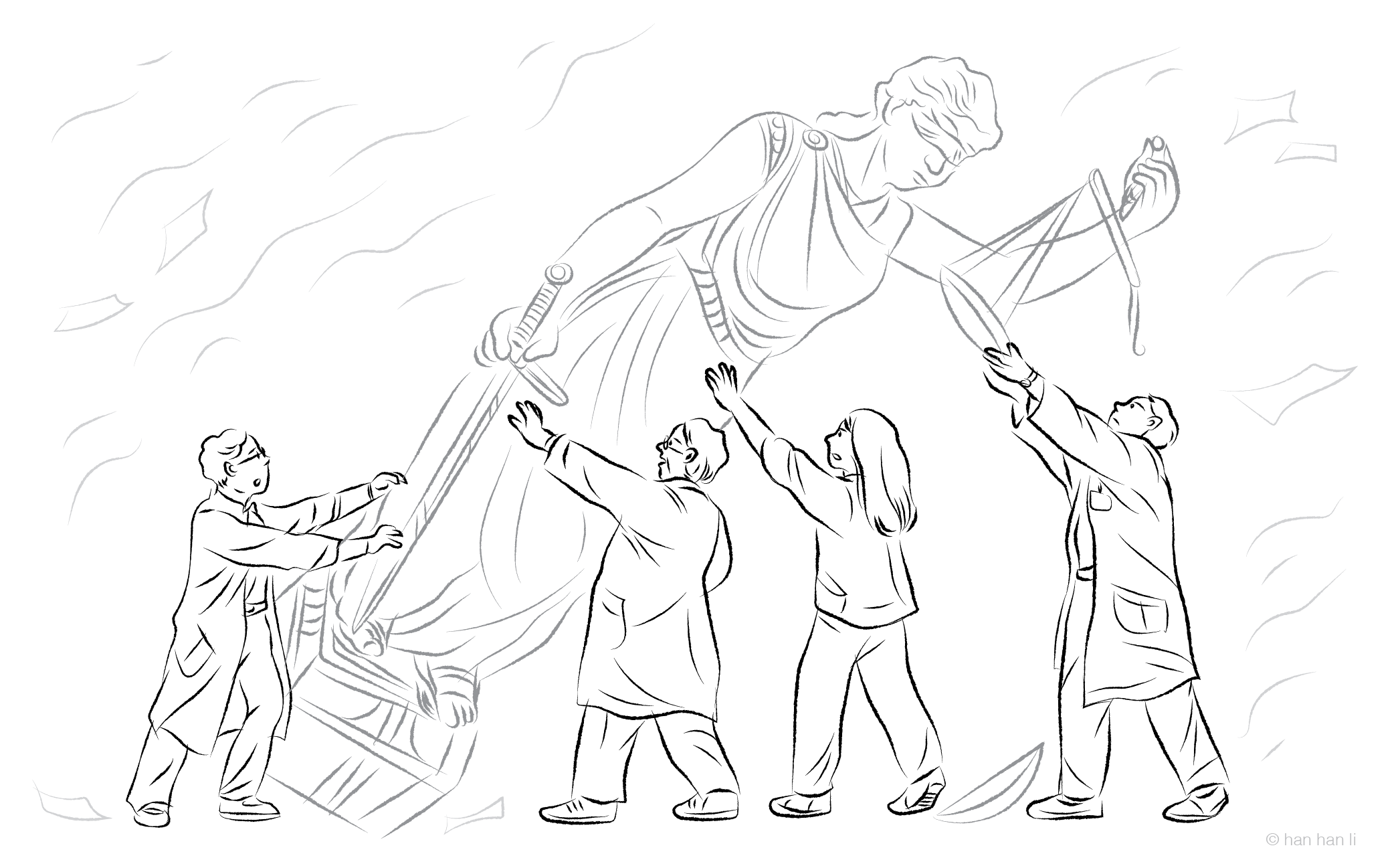
The United States of America is undergoing a political revolution and an underlying moral revolution. The role of bioethics during a revolution is unclear. This paper offers four suggestions for bioethics and bioethicists to meet our current moment: abandoning partisanship and absolutism, critically considering honour, embracing outsider status, and doing things.
References
1. Baker R. The Structure of Moral Revolutions: Studies of Changes in the Morality of Abortion, Death, and the Bioethics Revolution. Cambridge, MA: The MIT Press; 2019.
2. Mill JS. A few observations on the French Revolution. Monthly Repository. Aug 1833.
3. Baker R. Making Modern Medical Ethics: How African Americans, Anti-Nazis, Bureaucrats, Feminists, Veterans, and Whistleblowing Moralists Created Bioethics. Cambridge, MA: The MIT Press; 2024.
4. Beauchamp TL, Childress JF. Principles of Biomedical Ethics. 8th ed. New York: Oxford University Press; 2019.
5. American Society for Bioethics and Humanities. Core Competencies for Healthcare Ethics Consultation. 2nd ed. Glenview, IL: ASBH; 2011.
6. National Commission for the Protection of Human Subjects of Biomedical and Behavioral Research. The Belmont report: Ethical Principles and Guidelines for the Protection of Human Subjects of Research. Washington (DC): US Department of Health and Human Services; 1979.
7. Evans JH. The History and Future of Bioethics: A Sociological View. New York: Oxford University Press; 2012.
8. Engelhardt HT Jr. Consensus formation: the creation of an ideology. Cambridge Quarterly of Healthcare Ethics. 2002;11(1):7-16.
9. Kass LR. Reflections on public bioethics: a view from the trenches. Kennedy Institute of Ethics Journal. 2005;15(3):221-50.
10. Jonsen AR. The Birth of Bioethics. New York: Oxford University Press; 2003.
11. Appiah KA. The Honor Code: How Moral Revolutions Happen. 1st ed. New York: W.W. Norton; 2010.
12. McGhee HC. The Sum of Us: What Racism Costs Everyone and How We Can Prosper Together. 1st ed. New York: One World; 2021.
13. Hochschild AR. Strangers in Their Own Land: Anger and Mourning on the American Right. New York: The New Press; 2016.
14. Metzl JM. Dying of Whiteness: How the Politics of Racial Resentment is Killing America’s Heartland. New York: Basic Books; 2019.
15. Szabo L. Ethicists criticize treatment of teen, Texas patient. USA Today. 9 Jan 2014.
16. Scott M. Jahi McMath: lessons learned. Pediatrics. 2020;146(Suppl 1):S81-5.
17. Reich W. Shaping and mirroring the field: The Encyclopedia of Bioethics. In: Walter JK, Klein EP, editors. The Story of Bioethics. Washington (DC): Georgetown University Press; 2003. p.165-96.
18. Bosk CL. Professional ethicist available: logical, secular, friendly. Daedalus. 1999;128(4):47-68.
19. Brooks D. Trump’s single stroke of brilliance. New York Times. 24 Apr 2025.
Published
How to Cite
Issue
Section
License
Copyright (c) 2026 Aaron Wightman

This work is licensed under a Creative Commons Attribution 4.0 International License.
The Canadian Journal of Bioethics applies the Creative Commons Attribution 4.0 International License to all its publications. Authors therefore retain copyright of their publication, e.g., they can reuse their publication, link to it on their home page or institutional website, deposit a PDF in a public repository. However, the authors allow anyone to download, reuse, reprint, distribute, and/or copy their publication, so long as the original authors and source are cited.















_smaller.png)