Meeting the Moment: Bioethics in a Revolution
DOI :
https://doi.org/10.7202/1122843arMots-clés :
révolution, partisanerie, absolutisme, honneurLangue(s) :
AnglaisRésumé
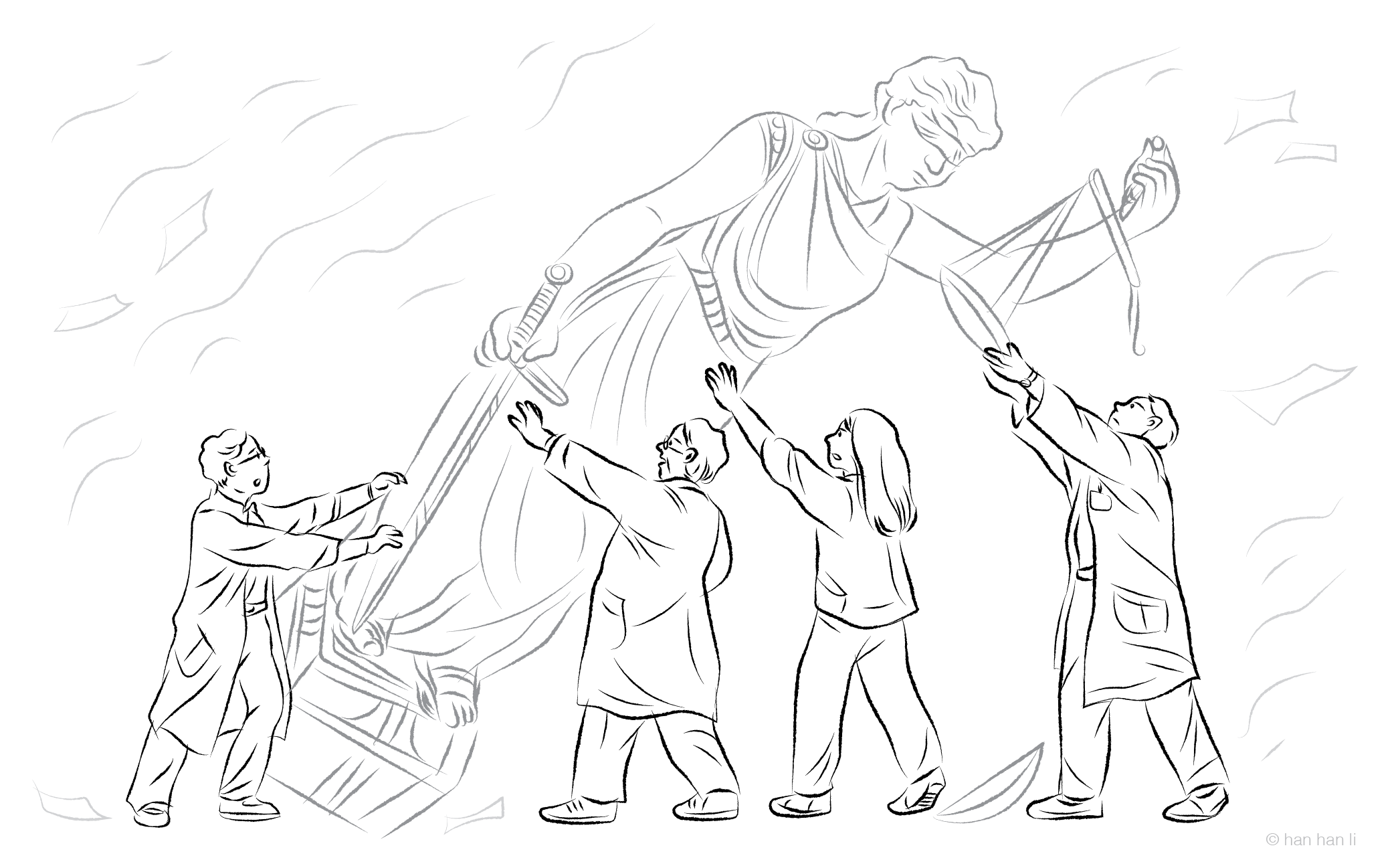
Les États-Unis d’Amérique connaissent actuellement une révolution politique et une révolution morale sous-jacente. Le rôle de la bioéthique pendant une révolution n’est pas clair. Cet article propose quatre suggestions pour que la bioéthique et les bioéthiciens puissent répondre aux besoins actuels : abandonner le sectarisme et l’absolutisme, considérer l’honneur d’un œil critique, accepter le statut d’outsider et agir.
Références
1. Baker R. The Structure of Moral Revolutions: Studies of Changes in the Morality of Abortion, Death, and the Bioethics Revolution. Cambridge, MA: The MIT Press; 2019.
2. Mill JS. A few observations on the French Revolution. Monthly Repository. Aug 1833.
3. Baker R. Making Modern Medical Ethics: How African Americans, Anti-Nazis, Bureaucrats, Feminists, Veterans, and Whistleblowing Moralists Created Bioethics. Cambridge, MA: The MIT Press; 2024.
4. Beauchamp TL, Childress JF. Principles of Biomedical Ethics. 8th ed. New York: Oxford University Press; 2019.
5. American Society for Bioethics and Humanities. Core Competencies for Healthcare Ethics Consultation. 2nd ed. Glenview, IL: ASBH; 2011.
6. National Commission for the Protection of Human Subjects of Biomedical and Behavioral Research. The Belmont report: Ethical Principles and Guidelines for the Protection of Human Subjects of Research. Washington (DC): US Department of Health and Human Services; 1979.
7. Evans JH. The History and Future of Bioethics: A Sociological View. New York: Oxford University Press; 2012.
8. Engelhardt HT Jr. Consensus formation: the creation of an ideology. Cambridge Quarterly of Healthcare Ethics. 2002;11(1):7-16.
9. Kass LR. Reflections on public bioethics: a view from the trenches. Kennedy Institute of Ethics Journal. 2005;15(3):221-50.
10. Jonsen AR. The Birth of Bioethics. New York: Oxford University Press; 2003.
11. Appiah KA. The Honor Code: How Moral Revolutions Happen. 1st ed. New York: W.W. Norton; 2010.
12. McGhee HC. The Sum of Us: What Racism Costs Everyone and How We Can Prosper Together. 1st ed. New York: One World; 2021.
13. Hochschild AR. Strangers in Their Own Land: Anger and Mourning on the American Right. New York: The New Press; 2016.
14. Metzl JM. Dying of Whiteness: How the Politics of Racial Resentment is Killing America’s Heartland. New York: Basic Books; 2019.
15. Szabo L. Ethicists criticize treatment of teen, Texas patient. USA Today. 9 Jan 2014.
16. Scott M. Jahi McMath: lessons learned. Pediatrics. 2020;146(Suppl 1):S81-5.
17. Reich W. Shaping and mirroring the field: The Encyclopedia of Bioethics. In: Walter JK, Klein EP, editors. The Story of Bioethics. Washington (DC): Georgetown University Press; 2003. p.165-96.
18. Bosk CL. Professional ethicist available: logical, secular, friendly. Daedalus. 1999;128(4):47-68.
19. Brooks D. Trump’s single stroke of brilliance. New York Times. 24 Apr 2025.
Téléchargements
Publié
Comment citer
Numéro
Rubrique
Licence
© Aaron Wightman 2026

Cette œuvre est sous licence Creative Commons Attribution 4.0 International.
La Revue canadienne de bioéthique applique la Creative Commons Attribution 4.0 International License à toutes ses publications. Les auteurs conserveront leur droit d'auteur sur leur publication et ils pourront, par exemple, réutiliser leur publication, mettre un lien sur leur page d'accueil ou site web institutionnel, ou déposer un fichier PDF dans un dépôt public. Toutefois, les auteurs permettent à quiconque de télécharger, réutiliser, réimprimer, distribuer, ou copier leur publication, tant que les auteurs originaux et les sources sont cités.














_smaller.png)