
A Broader "Call to Action": Returning to Advocacy as a Core Mission of Bioethics
DOI:
https://doi.org/10.7202/1122838arKeywords:
advocacy, bioethicists, marginalized, injustice, DEILanguage(s):
EnglishAbstract
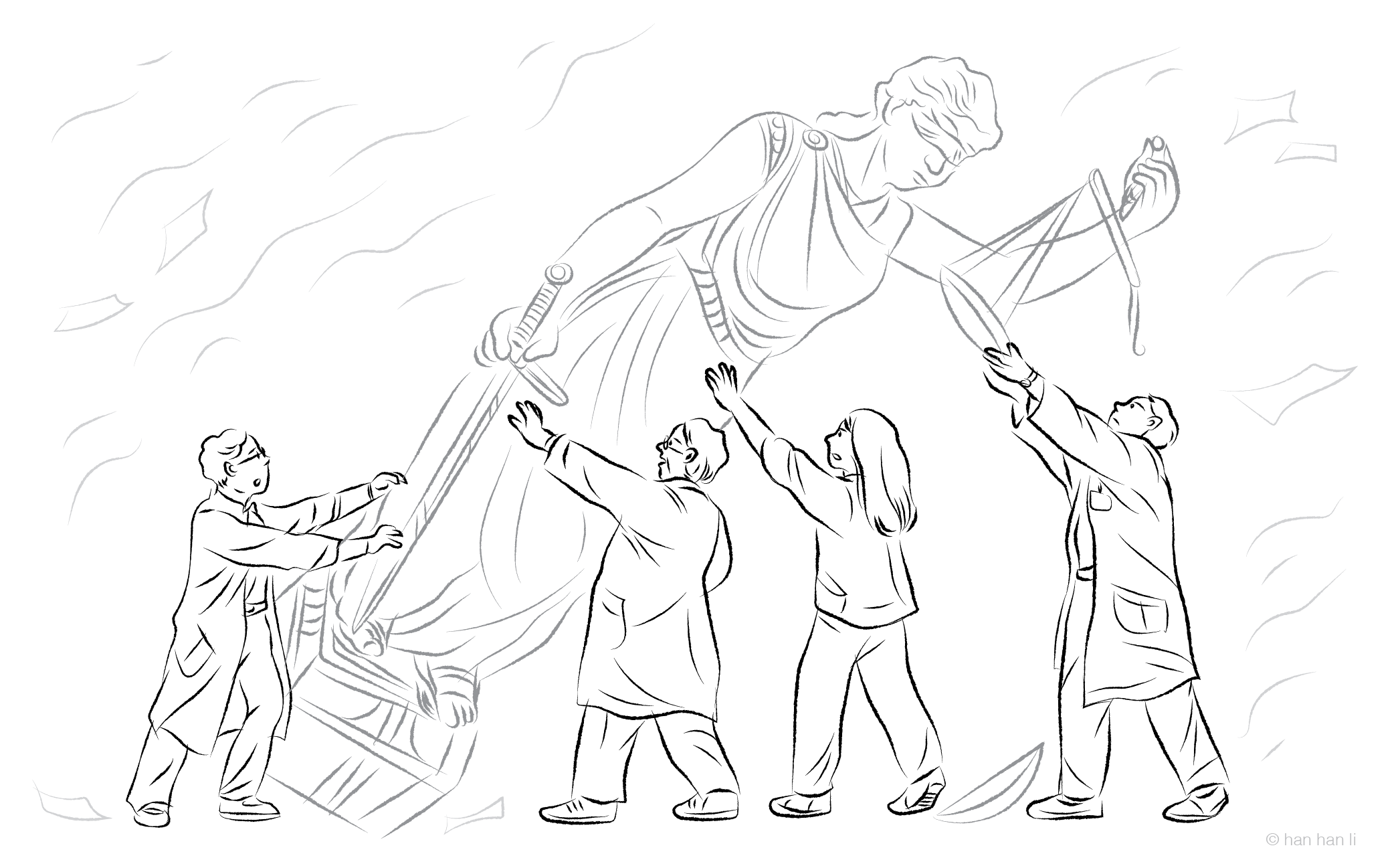
Recent political events, such as the Trump administration’s call for the removal of Diversity, Equity, and Inclusion initiatives, continue to undermine the marginal gains that the field of bioethics has sought to make in recent decades. Amidst growing nationalistic, far-right rhetoric worldwide, many bioethicists based in the United States are being pressed to find their footing in a political environment evolving largely in opposition to their personal and professional values. However, there are pockets of bioethicists who have long faced these circumstances, remaining excluded from mainstream bioethical discourse, and whose expertise must be embraced now more than ever. In this commentary, we highlight the central role advocacy has had and should play in bioethics, as demonstrated by the ongoing work of marginalized bioethicists. To effectively return to advocacy as a core mission of bioethics, and to mobilize acts of advocacy against injustices brought about by current political tides, we argue that collaborative efforts require whole-heartedly engaging all parties rather than allowing their siloed operation outside the mainstream, privileged, Western, and exclusionary paradigms that have historically dominated the field. If this can be achieved, we believe that bioethics will secure an enduring future irrespective of any governmental adversaries or power structures that it may face.
References
1. Garisto D. How Trump is following Project 2025’s radical roadmap to defund science. Nature. 27 Mar 2025.
2. Call for contributions: advocates, activists, architects of moral space? Canadian Journal of Bioethics / Revue canadienne de bioéthique. 2025.
3. Rogers WA, Scully JL. Activism and bioethics: taking a stand on things that matter. Hastings Center Report. 2021;51(4):32-3.
4. Johnson J, Gulliver R. What is the difference between advocacy and activism? The Commons: Social Change Library. 2023.
5. Carpenter M, Jordens CFC. When bioethics fails: intersex, epistemic injustice and advocacy. In: Walker M, editor. Interdisciplinary and Global Perspectives on Intersex. Cham: Springer International Publishing; 2022. p. 107-24.
6. Ashby MA, Morrell B. To the barricades or the blackboard: bioethical activism and the “stance of neutrality”. Journal of Bioethical Inquiry. 2018;15(4):479-82.
7. Scully JL. The responsibilities of the engaged bioethicist: Scholar, advocate, activist. Bioethics. 2019;33(8):872-80.
8. Miller DA, and Essex R. Using activism to combat systemic racism in bioethics and healthcare. American Journal of Bioethics. 2024;24(10):43-5.
9. Parker LS. Bioethics as activism. In: Eckenwiler LA, Cohn F, editors. The Ethics of Bioethics: Mapping the Moral Landscape. Johns Hopkins University Press; 2007. p. 144-57.
10. Jecker N, Caplan A, Ravitsky V, et al. Bioethicists must push back against assaults on diversity, equity, and inclusion. American Journal of Bioethics. 2025;25(8):5-11.
11. Neeman A. Critiquing the critique of advocacy. American Journal of Bioethics. 2023;23(7):97-9.
12. Fuller LL. Policy, advocacy, and activism: on bioethicists’ role in combating racism. American Journal of Bioethics. 2016;16(4):29-31.
13. Baylis F. The Olivieri debacle: where were the heroes of bioethics? Journal of Medical Ethics. 2004;30(1):44-9.
14. Rocco P, Tuohy B. A new dawn of bioethics: advocacy and social justice. American Journal of Bioethics. 2022;22(1):23-5.
15. Behrens KG. Towards indigenous African bioethics. South African Journal of Bioethics and Law. 2013;6(1):32-5.
16. Ray K, Fletcher FE, Martschenko DO, James JE. Black bioethics in the age of Black Lives Matter. Journal of Medical Humanities. 2023;44(2):251-67.
17. Chattopadhyay S, De Vries R. Bioethical concerns are global, bioethics is Western. Eubios Journal of Asian and International Bioethics. 2008;18(4):106-9.
18. Ho A. Racism and bioethics: are we part of the problem? American Journal of Bioethics. 2016;16(4):23-5.
19. Mhlambi S, Tiribelli S. Decolonizing AI ethics: relational autonomy as a means to counter AI harms. Topoi. 2023;42(3):867-80.
20. Gracia D. History of global bioethics. In: ten Have H, Gordijn B, editors. Handbook of Global Bioethics. Springer, Dordrecht; 2014. p. 19-34.
21. Delgado J. Re-thinking relational autonomy: Challenging the triumph of autonomy through vulnerability. Bioethics Update. 2019;5(1):50-65.
22. Sherwin S, Stockdale K. Whither bioethics now? The promise of relational theory. International Journal of Feminist Approaches to Bioethics. 2017;10(1):7-29.
23. Widdows H. Is global ethics moral neo-colonialism? An investigation of the issue in the context of bioethics. Bioethics. 2007;21(6):305-15.
24. Tosam MJ. Global bioethics and respect for cultural diversity: how do we avoid moral relativism and moral imperialism? Medicine, Health Care and Philosophy. 2020;23(4):611-20.
25. Svadzian A, Vasquez NA, Abimbola S, Pai M. Global health degrees: at what cost? BMJ Global Health. 2020;5:e003310.
26. Pierson L, Gibert S, Orszag L, et al. Bioethicists today: results of the views in bioethics survey. American Journal of Bioethics AJOB. 2024;24(9):9-24.
27. Hoberman J. Why bioethics has a race problem. Hastings Center Report. 2016;46(2):12-8.
28. Sudenkaarne T. A queer feminist posthuman framework for bioethics: on vulnerability, antimicrobial resistance, and justice. Monash Bioethics Review. 2024;42(Suppl 1):72-88.
29. Mackay R. Tlacoqualli in Monequi “The Center Good”: a brief consideration of Indigenous bioethics. Voices in Bioethics. 2022;8.
30. Rentmeester CA. Postcolonial bioethics -- a lens for considering the historical roots of racial and ethnic inequalities in mental health. Cambridge Quarterly of Healthcare Ethics. 2012;21(3):366-74.
31. Oliveira M de J, Osman EMRO. Bioethical pluralism: Latin American contributions to bioethics from a decolonial perspective. Revista Bioética. 2017;25(1):52-60.
32. Bamford R. Decolonizing bioethics via African philosophy: Moral neocolonialism as a bioethical problem. In: Hull G, editor. Debating African Philosophy. Routledge; 2018.
33. Barugahare J. Global health equity through decolonizing health research ethics in Africa: leveraging Kwame Nkrumah’s analysis of neocolonialism. The Global Health Network Collections. 18 Apr 2025.
34. Ray KS. It’s time for a Black bioethics. American Journal of Bioethics. 2021;21(2):38-40.
35. Mithani Z, Cooper J, Boyd JW. Race, power, and COVID-19: a call for advocacy within bioethics. American Journal of Bioethics. 2021;21(2):11-8.
36. Esparza CJ, Simon M, Bath E, Ko M. Doing the work—or not: the promise and limitations of diversity, equity, and inclusion in US medical schools and academic medical centers. Frontiers in Public Health. 2022;10:900283.
37. Grzanka PR, Brian JD, Shim JK. My bioethics will be intersectional or it will be [bleep]. American Journal of Bioethics. 2016;16(4):27-9.
38. Frimpong-Mansoh Y. Intercultural global bioethics. Journal of Medical Ethics. 2023;49(5):339-40.
39. Black T, Mowatt R. Bootleg rehab: still laundering Black rage. Black Agenda Report. 16 Apr 2025.
40. Bernasconi R. Ottobah Cugoano’s place in the history of political philosophy: Slavery and the philosophical canon. In: Hull G, editor. Debating African Philosophy. Routledge; 2018.
Published
How to Cite
Issue
Section
License
Copyright (c) 2026 Ian Stevens, Claire Bortolotto

This work is licensed under a Creative Commons Attribution 4.0 International License.
The Canadian Journal of Bioethics applies the Creative Commons Attribution 4.0 International License to all its publications. Authors therefore retain copyright of their publication, e.g., they can reuse their publication, link to it on their home page or institutional website, deposit a PDF in a public repository. However, the authors allow anyone to download, reuse, reprint, distribute, and/or copy their publication, so long as the original authors and source are cited.















_smaller.png)