Epistemic and Linguistic Injustice in Research: Sharing Experiential Knowledge
DOI:
https://doi.org/10.7202/1126634arKeywords:
epistemic injustice, linguistic injustice, English langage dominance, non-English-speaking researchers, academic inequities, linguistic diversityLanguage(s):
English, FrenchAbstract
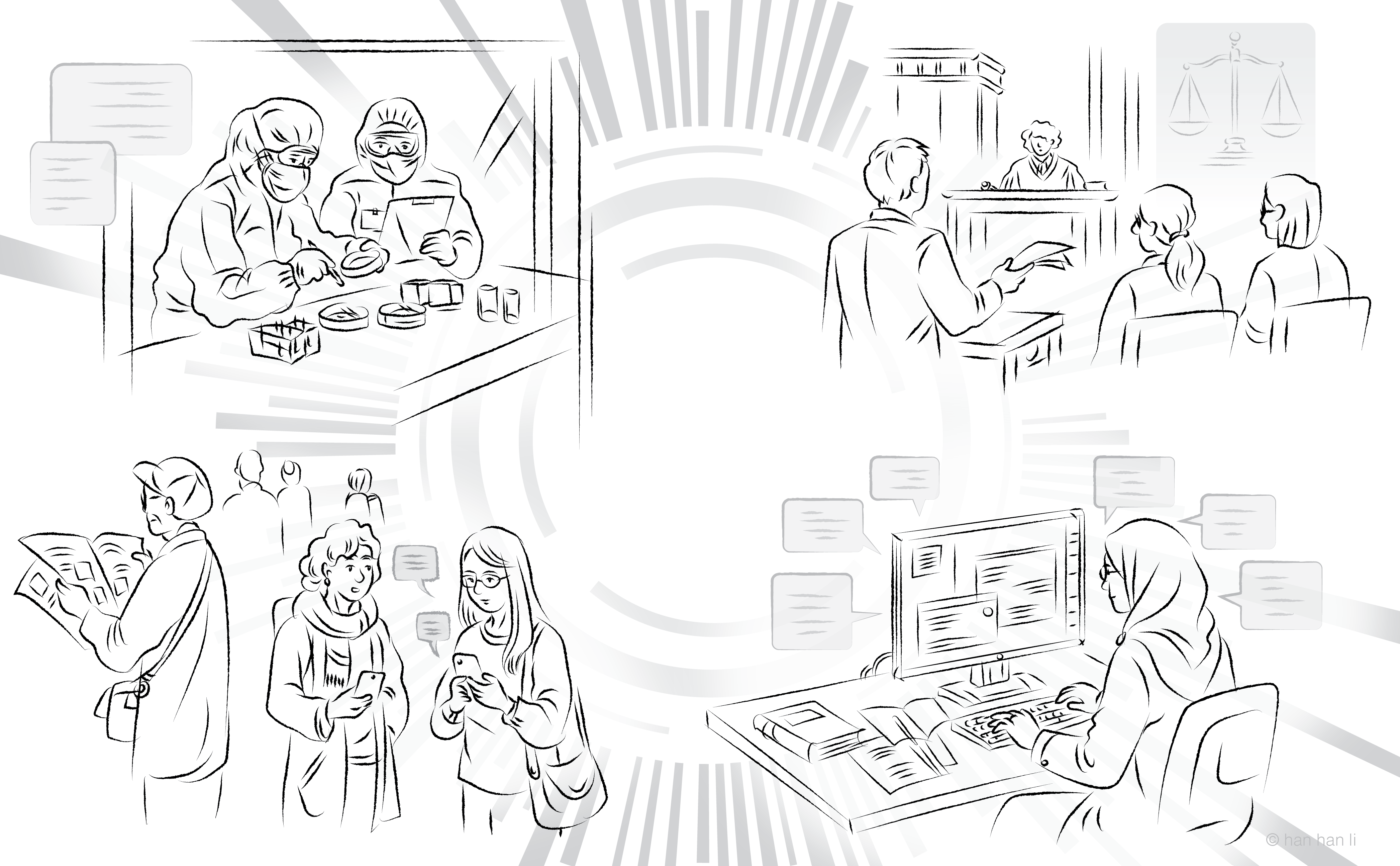
This article discusses a rarely addressed yet pivotal issue in academia: the epistemic hegemony of the English language and its detrimental effects on non-English-speaking researchers. Drawing on existing literature, ethical theoretical concepts, and our own experiential knowledge, we illuminate some of the epistemic and linguistic injustices embedded in academic systems. This linguistic domination undermines scholarly credibility, perpetuates exclusion, and affects knowledge production. We integrate thought experiments based on personal experiences to illustrate how this linguistic hegemony penalizes those compelled to write, present, and publish in a language other than their mother tongue. Such practices heighten feelings of shame, erode self-confidence, and restrict access to funding, honours, and reputable publication venues. We employ Stephanie Nixon’s coin model to underscore how unearned privileges are conferred on native English speakers while non-English-speaking academics face myriad invisible barriers. Although English may serve as a unifying medium, its disproportionate dominance curtails the diversity of perspectives needed to address pressing global crises. Linguistic and epistemic injustices harm not only individual researchers’ careers but also the collective scientific endeavour by excluding vast bodies of knowledge published or shared in other languages. Building on Amano et al., we advocate for multilingual dissemination, conscious engagement with non-English literature, and recognition of non-English-speaking researchers’ contributions. There needs to be broader dialogues aimed at upholding and celebrating linguistic and cultural diversity in research.
References
1. Amano T, Ramírez-Castañeda V, Berdejo-Espinola V, et al. The manifold costs of being a non-native English speaker in science. PLoS Biol. 2023;21(7):e3002184.
2. Faraldo-Cabana P. Research excellence and anglophone dominance: the case of law, criminology and social science. In: Carrington K, Hogg R, Scott J, Sozzo M, editors. The Palgrave Handbook of Criminology and the Global South. Palgrave Macmillan, Cham; 2018. p. 163-81.
3. Kelly N. Linguistic injustice in academia. MDPI Blog. 13 sepembre 2023.
4. Nixon SA. The coin model of privilege and critical allyship: implications for health. BMC Public Health. 2019;19:1637.
5. Killerman S. What does the asterisk in “trans*” stand for? It’s Pronounced Metrosexual. 2020.
6. Stryker S. Introduction: Trans* studies now. Transgender Studies Quarterly. 2020;7(3):299-305.
7. Baker J, Vasseur L. Prix et bourses: éliminer le fossé entre les sexes pour garantir un avenir équitable à tous les talents universitaires. Ottawa: Commission canadienne pour l’UNESCO; 2021.
8. Larivière V. Femmes et sciences : les premières données mondiales valident l’inégalité. Acfas Magazine. 18 mars 2014.
9. Association canadienne du personnel administratif universitaire. Information financière des universités et collèges (IFUC). ACPAU; 2024.
10. Grenier J, Francoeur J, Paquin É, Trépanier S, Larivière V. Découvrabilité des contenus en français: de la culture à la science. Acfas Magazine. 12 février 2025.
11. Central Intelligence Agency. The human word. CIA World Factbook; 2023.
12. Boulay B. The daily multi-layered barriers faced by non-native English researchers. Debating Development Research. 2 juillet 2024.
13. Legault JB. Recherche scientifique: l’obstacle de la langue pour les non-anglophones. L’actualité. 16 septembre 2023.
14. Mehra V. Challenges facing non-English speaking scholars. Research Information. 19 juillet 2019.
15. Fricker M. Epistemic Injustice: Power and the Ethics of Knowing. Oxford: Oxford University Press; 2007.
16. Pohlhaus G. Relational knowing and epistemic injustice: toward a theory of willful hermeneutical ignorance. Hypatia. 2012;27(4):715-35.
17. Applebaum B. Willful hermeneutical ignorance and the “critical race theory” controversy. Educational Theory. 2022;72(6):689-702.
18. Dotson K. Tracking epistemic violence, tracking practices of silencing. Hypatia. 2011;26(2):236-57.
19. Dotson K. Conceptualizing epistemic oppression. Social Epistemology. 2014;28(2):115-38.
20. Tobi A. Intra-group epistemic injustice. Social Epistemology. 2023;37(6):798-809.
21. Ministère de la culture et des communications du Québec, Ministère de la culture de France. Mission franco-québécoise sur la découvrabilité en ligne des contenus culturels francophones. Rapport. 2020.
Published
How to Cite
Issue
Section
License
Copyright (c) 2026 Marie-Josée Drolet, Valérie Lafond, Louis Pierre Côté

This work is licensed under a Creative Commons Attribution 4.0 International License.
The Canadian Journal of Bioethics applies the Creative Commons Attribution 4.0 International License to all its publications. Authors therefore retain copyright of their publication, e.g., they can reuse their publication, link to it on their home page or institutional website, deposit a PDF in a public repository. However, the authors allow anyone to download, reuse, reprint, distribute, and/or copy their publication, so long as the original authors and source are cited.












_smaller.png)